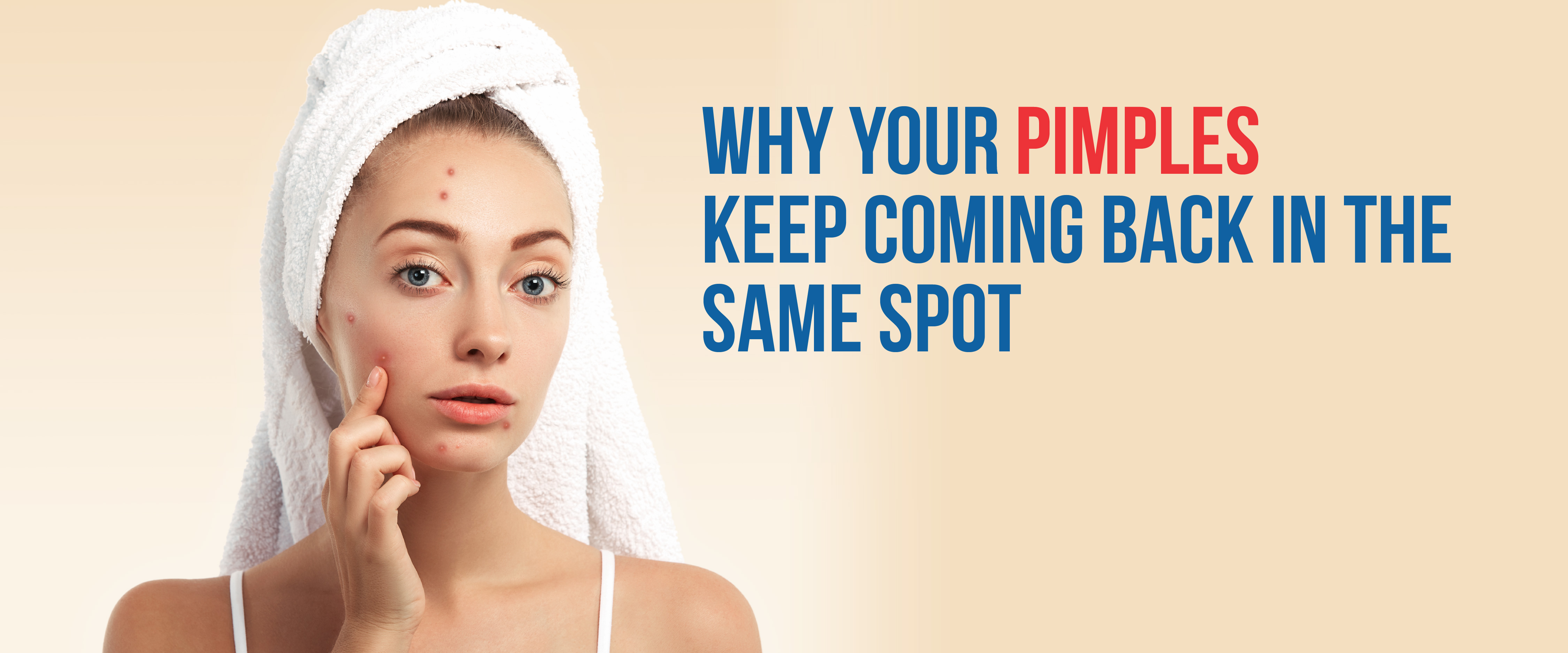
Why Your Pimples Keep Coming Back in the Same Spot
Table of Contents
- What Are Pimples?
- Difference Between Pimples and Acne
- Why Do Pimples Keep Coming Back in the Same Spot?
- How to Break the Pimple Cycle
- Management and Treatment
- Dermatologist Treatments
- Home Care Tips for Pimples
- When Should You See a Dermatologist?
Almost everyone experiences pimples at some point in life. While most disappear within a few days, some seem to return repeatedly in the same spot. These recurring breakouts are often a sign that the underlying cause has not been fully addressed.
Pimples are commonly associated with adolescence because of hormonal changes, but they can affect people of all ages and genders. Boys and girls are equally susceptible, and adult acne is increasingly common. Understanding why pimples keep coming back is the first step toward achieving clearer, healthier skin.
What Are Pimples?
Pimples are small skin eruptions caused by clogged or inflamed oil glands or an increased presence of acne-causing bacteria beneath the skin. There are different types of lesions, such as blackheads, whiteheads, papules, pustules, nodules, and cysts.
Pimples occur when skin pores become clogged with the following:
- Excess oil (sebum)
- Dead skin cells
- Bacteria
- Dirt and debris
They commonly appear on:
- Face
- Neck
- Chest
- Shoulders
- Back
Pimples may appear as:
- Whiteheads
- Blackheads
- Papules (small red bumps)
- Pustules (pus-filled bumps)
- Nodules
- Cysts
Difference Between Pimples and Acne
Why Do Pimples Keep Coming Back in the Same Spot?
Recurring pimples usually develop when inflammation remains deep beneath the skin or when the same pore repeatedly becomes blocked with oil, dead skin cells, and bacteria. Several underlying factors can contribute to repeated breakouts.
Unaddressed Hormonal Imbalance
One of the major causes of recurring pimples is hormonal imbalance. Conditions such as PCOS, thyroid disorders, and hormonal fluctuations during the menstrual cycle can trigger repeated breakouts.
Stress and Lifestyle Factors
Chronic stress increases cortisol, a hormone that stimulates oil production. Poor sleep, irregular routines, and diets high in refined carbohydrates may also contribute to acne flare-ups in some individuals.
Incomplete Treatment
Stopping acne treatment too early—especially antibiotics or retinoids—may allow inflammation and acne-causing bacteria to return.
Skipping Maintenance Care
Even after acne clears, the skin needs long-term maintenance. Continuing an appropriate skincare routine helps prevent future breakouts.
Poor Makeup and Skincare Choices
Using heavy creams, comedogenic makeup, or harsh skincare products can clog pores and trigger recurring pimples, particularly in oily or sensitive skin.
Breaking out repeatedly is not simply bad luck—it usually means the underlying cause has not been completely addressed.
How to Break the Pimple Cycle
Get a Root-Cause Diagnosis
Do not rely solely on social media advice or product advertisements. First, understand what type of acne you have, then consult a dermatologist who can recommend treatment based on your skin type, hormone levels, and individual triggers.
Complete the Full Course of Treatment
Whether you are prescribed topical medications, oral medicines, chemical peels, or acne scar treatments, complete the full course recommended by your dermatologist. Do not stop treatment halfway simply because your skin begins to improve.
Follow a Maintenance Plan
Once active acne is under control, maintaining a personalised skincare routine with suitable active ingredients and periodic dermatologist-recommended treatments can help prevent recurrence.
Management and Treatment
How Do You Get Rid of a Pimple?
Avoid popping, squeezing, or scratching pimples, as this can worsen inflammation, increase the risk of infection, and lead to permanent scarring.
Over-the-Counter (OTC) Treatments
- Azelaic Acid: A naturally occurring acid that helps reduce bacteria and inflammation.
- Benzoyl Peroxide: Helps reduce acne-causing bacteria and unclog pores. Lower-strength formulations are often less irritating.
- Retinoids (Vitamin A derivatives): Help prevent clogged pores and reduce new acne formation. Using a moisturiser alongside retinoids may reduce irritation.
- Salicylic Acid: Helps remove dead skin cells and keeps pores clear.
If acne does not improve with OTC medications, your dermatologist may recommend prescription medicines, including antibiotics or hormone-based treatment where appropriate.
Dermatologist Treatments
Depending on the severity of acne, your dermatologist may recommend:
- Chemical peels to remove damaged skin and reduce acne.
- Laser treatments to reduce oil production and improve acne.
- Microdermabrasion for selected patients to improve skin texture and unclog pores.
- Acne scar treatments after active acne has been controlled.
Home Care Tips for Pimples
While home care may support healthy skin, it should never replace medical treatment for persistent acne.
Some helpful measures include:
- Tea tree oil (with caution): May help reduce acne-causing bacteria in some people. Always perform a patch test before use.
- Warm compress: Can help relieve discomfort from painful pimples and encourage drainage.
- Ice packs: Applying ice wrapped in a clean cloth for a few minutes may help reduce swelling, redness, and pain.
- Use a gentle cleanser and non-comedogenic moisturiser: This helps maintain the skin barrier without clogging pores.
When Should You See a Dermatologist?
Consult a dermatologist if:
- Pimples keep returning in the same area.
- Acne persists despite over-the-counter treatment.
- You develop painful cysts or nodules.
- Acne leaves scars or dark marks.
- Breakouts are affecting your confidence or quality of life.
Early treatment can prevent long-term skin damage and improve treatment outcomes.
Conclusion
Clear skin starts with understanding the cause—not just treating the symptom. If the same pimple keeps coming back, it may be your skin’s way of signalling an ongoing problem beneath the surface. Early diagnosis and the right treatment plan can help control acne, prevent scars, and reduce future breakouts.
Act as soon as persistent pimples appear, regardless of age or gender. Timely treatment today can help you achieve healthier skin tomorrow.
At Star Hospitals, Hyderabad, experienced dermatologists provide comprehensive evaluation and personalised treatment for acne, recurring pimples, acne scars, pigmentation, and other skin conditions. With advanced diagnostic facilities, evidence-based treatments, and compassionate care, Star Hospitals is committed to helping patients achieve healthier, clearer skin with long-lasting results.