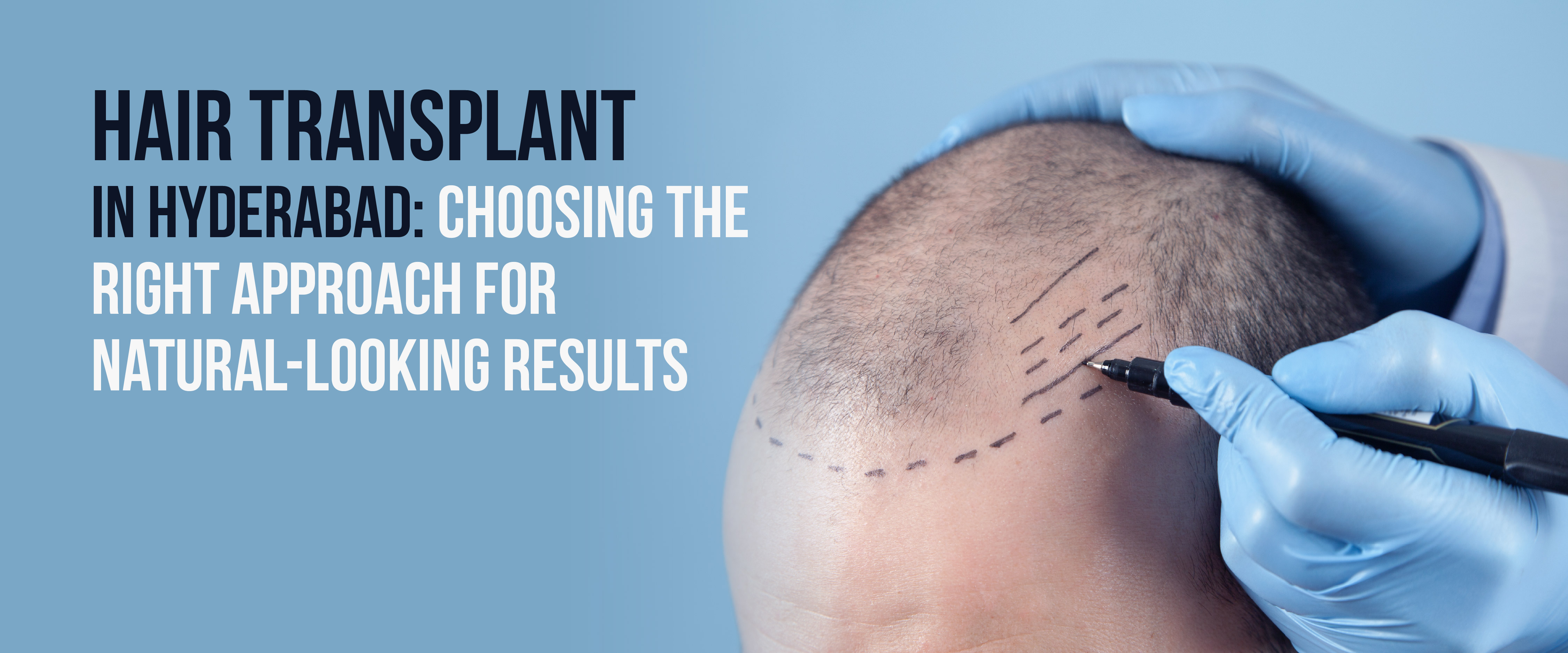
Hair Transplant in Hyderabad: Choosing the Right Approach for Natural-Looking Results
Hair loss rarely happens overnight. A receding hairline, thinning crown, or progressively wider parting may begin quietly and become more noticeable over time. While hair fall can have many causes, including hereditary hair loss, hormonal changes, nutritional deficiencies, illness and certain medicines, permanent hair loss may sometimes be considered for hair transplantation.
But a hair transplant is not simply about moving hair from one part of the scalp to another. The cause of hair loss, the condition of the scalp, donor-hair availability, the pattern of future hair loss and the desired appearance all need to be considered before deciding on treatment.
When Is a Hair Transplant Considered?
Hair transplantation is generally considered when there is sufficient healthy donor hair and the hair loss pattern is suitable for transplantation. It is particularly relevant in some cases of androgenetic alopecia, commonly known as male or female pattern hair loss.
A consultation with a dermatologist or hair-restoration specialist is important because not every type of hair loss requires, or is suitable for, a transplant. Medical treatment may be more appropriate when an underlying condition is causing active hair loss.
The assessment may consider:
- The pattern and extent of hair loss
- Scalp and hair health
- Density of the donor area
- Hair characteristics and follicle quality
- Age and likely progression of hair loss
- Previous treatments
- The number of grafts that may be required
- Expectations regarding density and appearance
Which Hair Transplant Technique Is Right?
Two established techniques are Follicular Unit Extraction (FUE) and Follicular Unit Transplantation (FUT).
With FUE, individual follicular units are extracted from the donor area and transplanted into areas where hair has thinned. FUT involves removing a strip of scalp containing hair follicles, which is then divided into follicular grafts for transplantation.
Neither technique is universally better. The choice depends on the patient’s hair loss, donor area, scalp characteristics, number of grafts required, hairstyle and other clinical considerations.
A well-planned procedure also considers hairline design, direction, density and donor-area preservation. Simply transplanting a large number of grafts does not necessarily produce a natural result.
Hair Transplant Services at STAR Hospitals
At STAR Hospitals, hair loss is addressed through dermatological evaluation as well as hair-restoration services. The Dermatology department provides diagnosis and treatment for hair disorders and alopecia, with treatment planned according to the underlying cause.
Hair transplantation is also offered through Illumina by STAR Hospitals, Hyderabad, using both FUE and FUT techniques. Healthy follicles are transferred from suitable donor areas to thinning or bald areas, with attention to the natural direction and density of the transplanted hair. Regrowth takes place progressively over several months rather than immediately after the procedure.
The hair-restoration services include:
- FUE hair transplantation
- FUT hair transplantation
- Assessment and management of hair loss and alopecia
- PRP hair transplantation/regrowth treatments in appropriate cases
- Dermatological evaluation of the scalp and hair
- Personalised treatment planning based on the individual’s pattern of hair loss.
STAR’s dermatology team includes specialists with expertise in hair disorders and hair transplantation. Hair transplant surgery is among Dr Bathula Amulya’s areas of expertise, while Dr Siva Rami Reddy’s expertise includes androgenetic alopecia, hair disease management, hair regrowth treatment and PRP hair transplantation.
What Should You Expect After a Hair Transplant?
A hair transplant is a gradual process. The transplanted follicles need time to establish themselves, and visible hair growth develops over the following months. The final appearance should therefore be assessed over time rather than immediately after the procedure.
It is also important to understand that a transplant does not necessarily stop hereditary hair loss in areas that have not been treated. Depending on the cause and pattern of hair loss, a dermatologist may recommend medical treatment alongside or after transplantation.
For someone considering a hair transplant in Hyderabad, the important question is not simply how many grafts can be transplanted. A proper assessment, appropriate technique, thoughtful hairline planning, preservation of the donor area and realistic expectations all contribute to the outcome.
At STAR Hospitals and Illumina, patients can access dermatology, hair-loss management and hair-transplant services within the same healthcare system, allowing the focus to remain on both the underlying hair-loss condition and the desired aesthetic result.