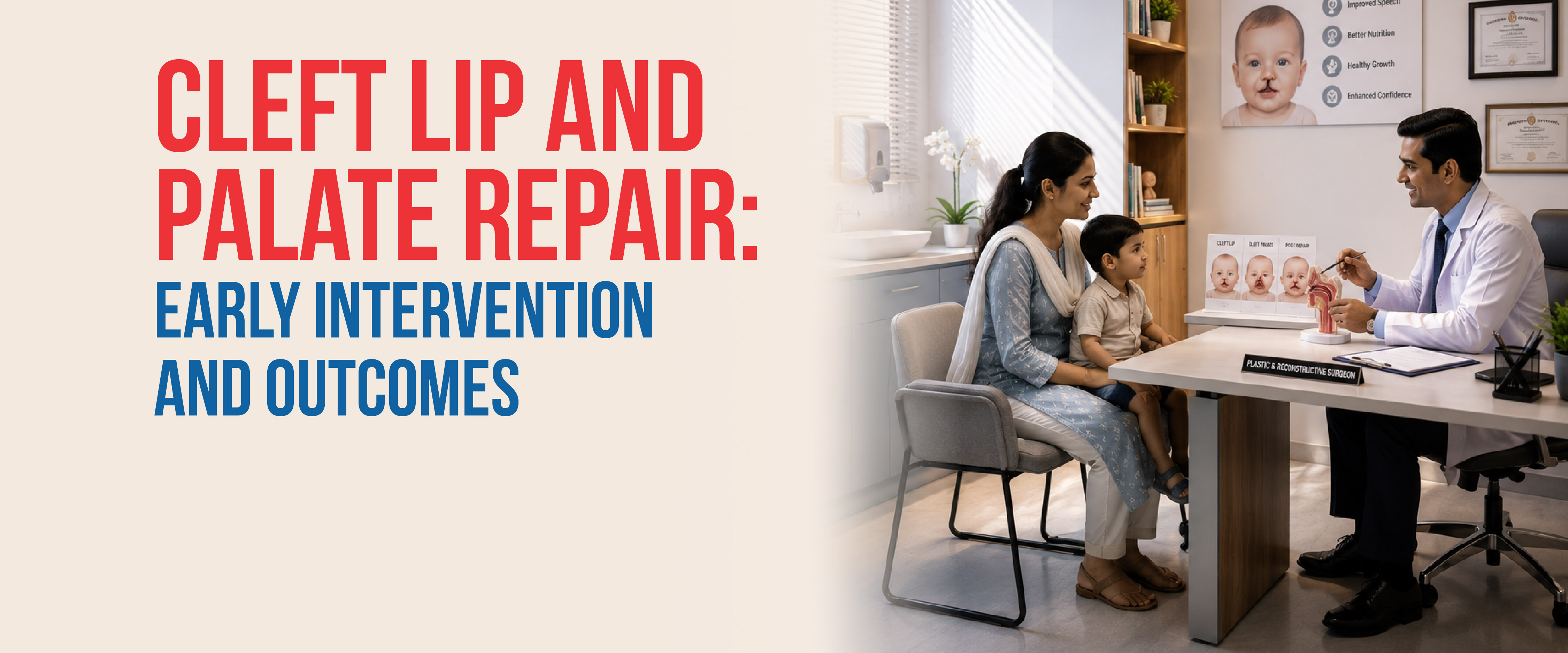
Cleft Lip and Palate Repair: Early Intervention and Outcomes
Table of Contents
- Cleft Lip and Palate Repair
- Understanding Cleft Lip and Palate
- The Everyday Challenges for Children
- The Power of Early Intervention
- Timeline for Surgery: What to Expect & Beyond
- Recovery and Long-Term Outlook
- Compassionate Cleft Care at STAR Hospitals
Cleft lip and cleft palate are among the most common congenital conditions worldwide. They happen during early fetal development when the tissues of the lip or the roof of the mouth don’t fuse completely. A cleft can affect just the lip, just the palate, or both, ranging from a slight notch to a more complex separation.
While discovering your child has a cleft can feel overwhelming, it is important to note that it is treatable. Thanks to modern reconstructive surgery and team-based medical care, the vast majority of children go on to lead healthy, active lives with excellent functional and cosmetic outcomes.
Understanding Cleft Lip and Palate
- Cleft Lip: A separation in the upper lip that can occur on one or both sides.
- Cleft Palate: An opening in the roof of the mouth, which happens when the palate doesn’t fully close during pregnancy.
The Causes: There is rarely a single pinpointed cause. Instead, it is usually a combination of genetic factors and environmental influences during pregnancy, such as maternal nutrition or certain medications.
The Everyday Challenges for Children
Because the lip and palate are central to eating, speaking, and breathing, an unrepaired cleft can impact a child’s development in several ways:
- Difficulty Feeding: Babies with a cleft palate often struggle to create the suction needed to nurse or bottle-feed, making weight gain a challenge in the early weeks.
- Speech Development: The palate is crucial for clear speech. Without repair, children may struggle to form certain sounds, resulting in a distinct nasal tone.
- Hearing and Ear Infections: A cleft palate can cause fluid to build up in the middle ear, making children more prone to chronic ear infections and potential hearing issues.
- Dental and Jaw Alignment: It’s common for teeth to be crowded, misplaced, or missing entirely near the cleft line, which often requires orthodontic care later in childhood.
- Social and Emotional Wellbeing: As children grow, visible facial differences can sometimes affect their self-esteem and social confidence, highlighting the value of early intervention and strong family support.
The Power of Early Intervention
Many clefts are now detected during routine prenatal ultrasounds, giving families time to connect with specialists before the baby is even born. Because a cleft affects multiple areas of development, care needs to be integrated: families need to work with a coordinated, multidisciplinary team that typically includes:
- Plastic and reconstructive surgeons
- Pediatricians and nutritionists
- Speech-language pathologists
- ENT (Ear, Nose, and Throat) specialists and audiologists
- Orthodontists and pediatric dentists
Timeline for Surgery: What to Expect & Beyond
1. Cleft Lip Repair (Typically at 3 to 6 Months)
Surgeons usually address the lip first once the baby is strong and growing well. The goal is to close the separation, restore proper muscle function around the mouth, and restore symmetry of the nose and lips while minimising future scarring.
2. Cleft Palate Repair (Typically at 9 to 18 Months)
Palate surgery is timed to happen before a child begins speaking clearly. This procedure closes the gap between the nasal and oral cavities, which immediately improves swallowing, supports natural speech development, and helps prevent chronic fluid buildup in the ears.
Note: While these primary surgeries lay the groundwork, some children may need minor touch-ups or specialized procedures (such as a bone graft in the upper jaw) as their facial bones grow.
Recovery and Long-Term Outlook
Hospital stays for these surgeries are generally brief, and young children heal remarkably fast. In the days following surgery, your care team will guide you through specialized feeding techniques, pain management, and wound care to keep your baby comfortable.
As your child grows, their progress will be tracked through routine speech assessments and dental check-ins. With consistent follow-up care, the long-term outlook is incredibly bright. Most children enjoy clear speech, normal hearing, excellent nutrition, and natural facial symmetry, allowing them to thrive socially and academically.
Compassionate Cleft Care at STAR Hospitals
Learning that your child has a cleft condition can bring up a lot of anxiety, but you do not have to navigate this road alone. At STAR Hospitals, we provide a seamless, compassionate approach to cleft care. Through Illumina by STAR Hospitals, our dedicated multidisciplinary team, including expert reconstructive plastic surgeons, pediatricians, ENT specialists, and speech therapists, works together to design a personalised treatment plan for your child.
From the very first evaluation through long-term follow-up, our focus is on restoring function, achieving natural aesthetics, and giving your child the confidence to smile brightly.