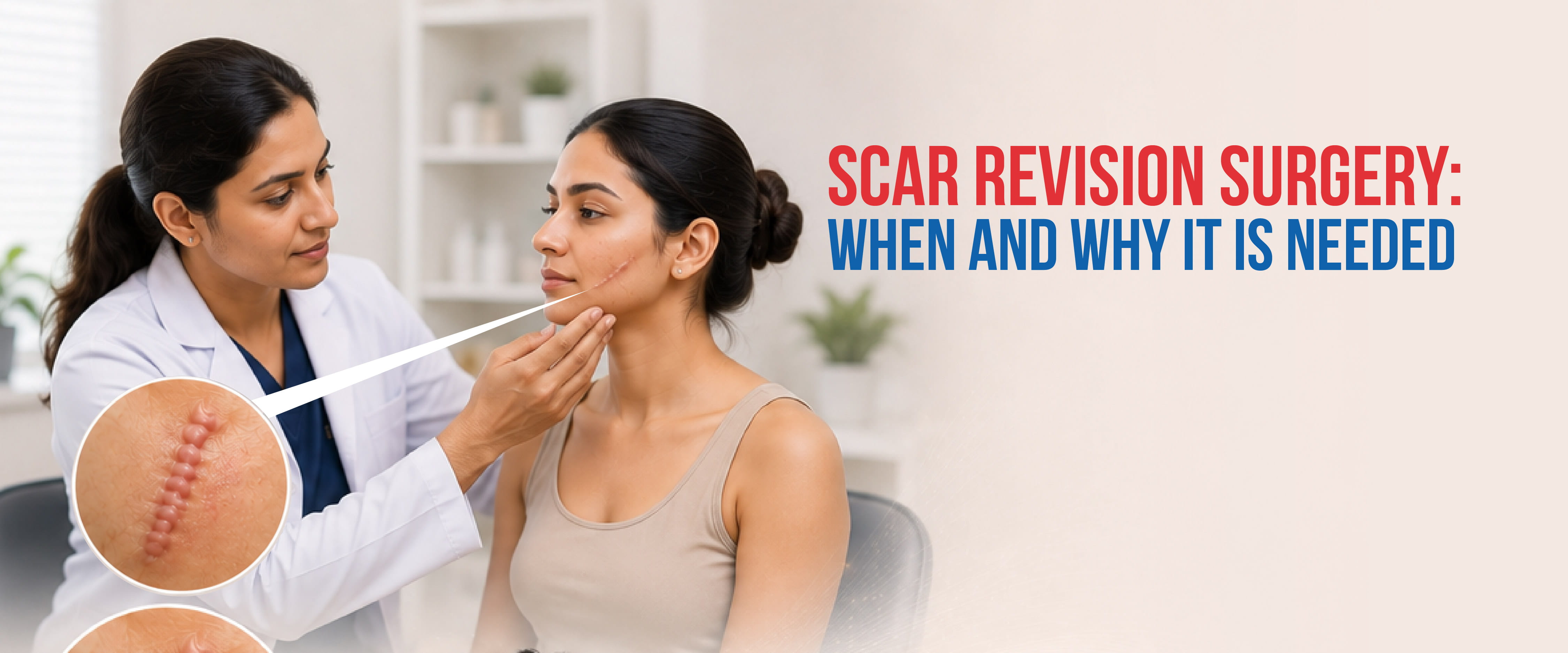
Scar Revision Surgery: When and Why It Is Needed
Table of Contents
- Why Do Some Scars Become Problematic?
- Types of Scars That May Need Revision
- When Is Scar Revision Surgery Needed?
- Non-Surgical Treatments for Scars
- Surgical Options for Scar Revision
- Scar Revision Services at STAR Hospitals
Scars are a natural part of the body’s healing process after injury, surgery, burns, acne, or infection. While many scars fade gradually with time, some become thick, raised, depressed, discoloured, or tight, affecting both appearance and normal function. In such cases, scar revision surgery may help improve the texture, flexibility, and visibility of the scar.
Scar revision is a specialised reconstructive procedure designed to make scars less noticeable and, in some cases, restore movement or relieve discomfort caused by scar tissue.
Why Do Some Scars Become Problematic?
Scars form when the skin repairs itself after damage. The final appearance of a scar depends on several factors, including:
- Depth and size of the wound
- Location of the injury
- Skin type and age
- Genetics
- Infection or delayed healing
- Excess tension on the wound
Certain scars heal abnormally and may continue to grow, tighten, or become more visible over time.
Types of Scars That May Need Revision
Hypertrophic Scars
These are raised, thick scars that remain within the boundaries of the original wound. They may appear red, itchy, or uncomfortable.
Keloids
Keloids are overgrown scars that extend beyond the original injury site. They can continue enlarging over time and may cause pain or cosmetic concerns.
Contracture Scars
Common after burns, contracture scars tighten the skin and may restrict movement around joints, the neck, hands, or face.
Depressed or Atrophic Scars
These scars appear sunken or uneven and are commonly seen after severe acne or chickenpox.
Wide Surgical Scars
Some surgical scars heal with widening or irregular texture, especially in areas under tension.
When Is Scar Revision Surgery Needed?
Scar revision may be recommended when a scar:
- Restricts movement or joint function
- Causes pain, itching, or discomfort
- Interferes with facial expressions or eyelid closure
- Affects confidence or emotional well-being
- Appears excessively raised, wide, or discoloured
- Does not improve with non-surgical treatments
The timing of surgery is important. In many cases, surgeons prefer waiting until the scar has matured, which may take several months. However, severe contractures or functional problems may require earlier intervention.
Non-Surgical Treatments for Scars
Not all scars require surgery. Mild scars may improve with:
- Silicone gel sheets
- Pressure therapy
- Steroid injections
- Laser treatments
- Micro-needling
- Chemical peels
- Scar massage
If these treatments are insufficient, surgical correction may be considered.
Surgical Options for Scar Revision
The choice of procedure depends on the type, size, and location of the scar.
Scar Excision
The scar is surgically removed, and the skin is carefully re-closed to create a finer and less visible scar line.
Z-Plasty and Tissue Rearrangement
This technique changes the direction of the scar and reduces tension, especially for contracture scars that limit movement.
Skin Grafting
For large scars or burns, healthy skin may be taken from another area of the body to improve coverage and flexibility.
Flap Reconstruction
In complex scars involving deeper tissues, nearby skin and soft tissue may be repositioned to restore both appearance and function.
Laser-Assisted Scar Revision
Laser treatments may be combined with surgery to improve scar colour, thickness, and texture.
Recovery After Scar Revision
Recovery depends on the extent of surgery and the location of the scar. Most patients require wound care, sun protection, and follow-up visits to ensure proper healing.
Doctors may also recommend:
- Compression garments
- Silicone therapy
- Physiotherapy for contracture scars
- Additional laser or injection treatments
Although scars cannot be removed completely, revision procedures can significantly improve their appearance and function.
Scar Revision Services at STAR Hospitals
STAR Hospitals offers advanced scar revision and reconstructive procedures through its Plastic, Reconstructive, and Aesthetic Surgery department. The hospital manages post-surgical scars, burn scars, traumatic scars, acne scars, keloids, and contracture deformities using both surgical and non-surgical approaches. With experienced reconstructive surgeons, advanced laser technologies, skin grafting and flap reconstruction expertise, and multidisciplinary rehabilitation support, the service is one of the best in the country.
Book an appointment or visit your nearest branch today to know more